


A destination driven by imagination
A destination driven by imagination
NAVER | Design | Lim Ju-yeol
NAVER Map is paving a new path. Starting off as a route-finding service, it is now passing by a road marked by reservation, review, and AI-based place recommendation, and heading for an uncharted territory with “spatial intelligence.”
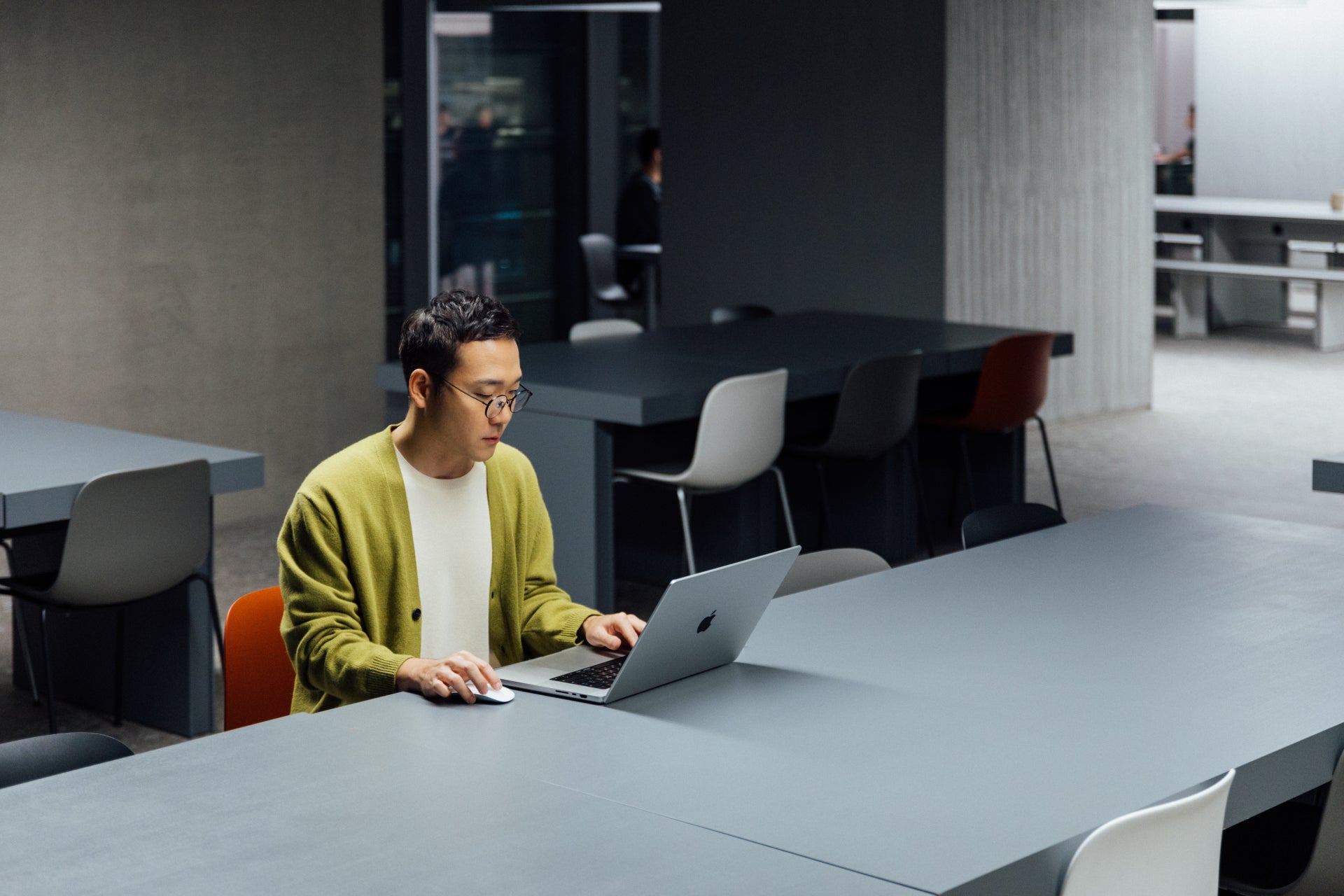
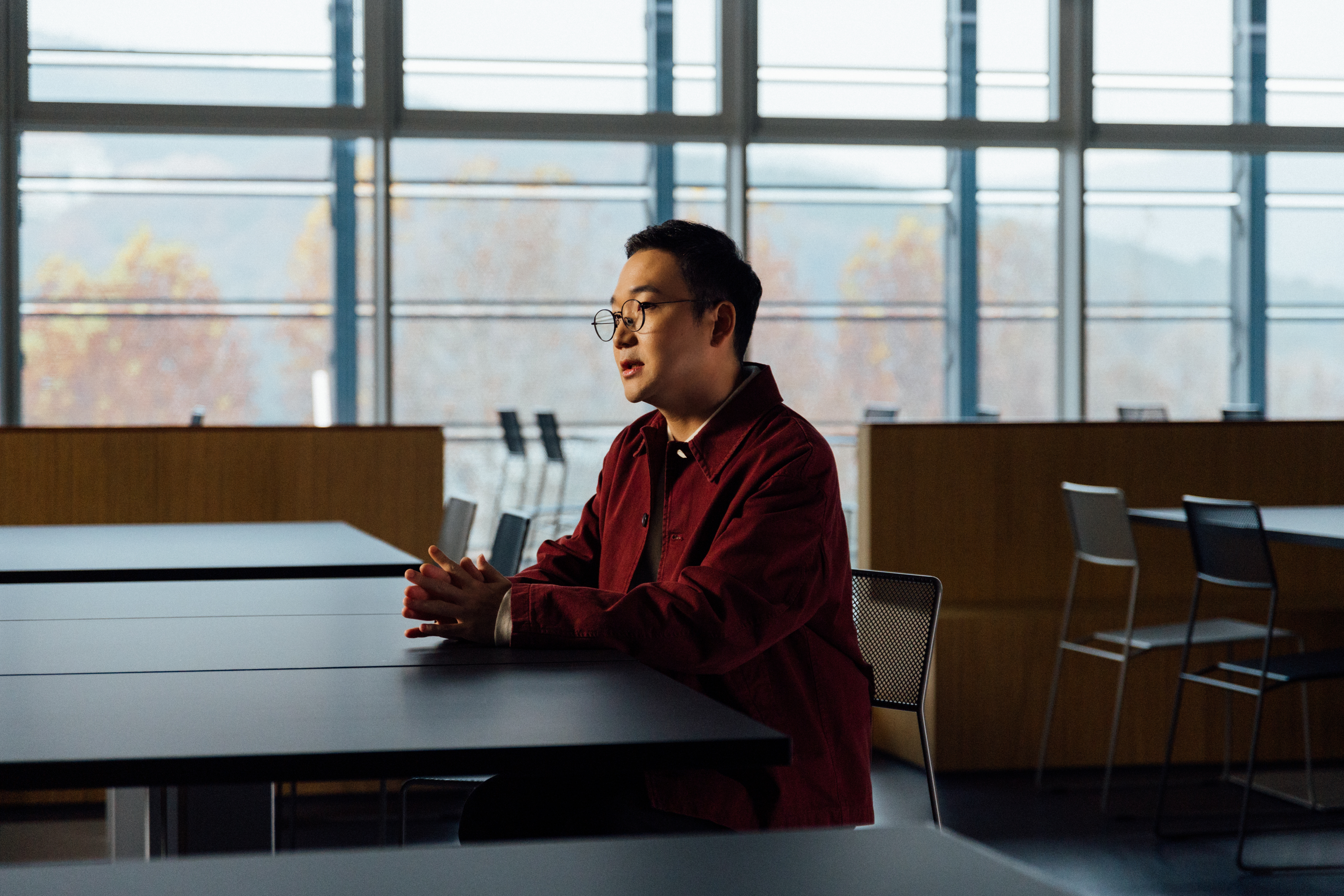
Lim Ju-yeol of NAVER Place, a UX designer with 17 years of work experience, is realizing the vague imagination he once had of the map service. “What if the map could also show real-time information of pop-up stores?” “What if the map could automatically recommend weekend go-to places?” Such imaginations are turning into real life in the form of real-time video reviews and place recommendations.
His eyes sparkled when asked about the “future of NAVER Map.” Making glasses on his eyes with his fingers, Ju-yeol believes that a single map app and a smart goggle will show everything in the near future, from information about all the places within your sight to news of your neighborhood. Every day is a step closer to a destination driven by his imagination.
Tell us about your work.
Hello. I am Lim Ju-yeol with 17 years of experience as a designer, currently in charge of the user experience of the NAVER Map app as part of the NAVER Place Design team. My role is to help better connect our map users and business owners online. This involves exploring better options from the usability perspective, discovering additional user needs, and finding other areas that could potentially create new value.
Tell us about your most memorable project.
I’d like to introduce a project that aims to change user perception. Reviews on our existing map service were merely considered a tool for evaluating businesses or receiving NAVER Pay reward points. Despite the large number of reviews collected, we thought mere monetary rewards would not be enough to sustain our review content. A big question mark we faced was, “How could we make users think of reviews not as a tool, but the purpose per se?” Thus, we made sure that reviews are perceived not as a way to evaluate businesses, but as one's experience at a place, and a way to share such experiences with others. For instance, unlike how we just gave points to users for writing reviews, users now know how their reviews helped the store, and other places visited by people who went to similar places. In other words, we strengthened the emotional, internal reward instead of the material one. Furthermore, while reviews used to be one-off and were practically shoved away and forgotten after users have written them, users can now collect and read their past reviews in the MY tab, and also see the reactions others have left on their reviews. All of this is to motivate users to write reviews and make them feel that sharing their experience is more rewarding than they thought.
People often say that was then and this is now, but reviews will always be reviews. But what’s different is that we now have full-time reviewers, as well as people who use reviews as their own diary even without any special reward. Someone else’s review could be an interesting text to read, or even make you want to go to a place you never thought of visiting. Such changes have been a meaningful driving force not only for the users, but also for the map service. This project helped the service advance in a positive direction, with AI analyzing users’ sincere reviews to recommend attractive places.
I heard there are areas that the Map team has been especially focusing on these days.
There are mainly two pillars. First, enhancing the “recommendation and exploration experience.” In the past, the Map app was mostly used to “search” places shown on TV or social media. However, it has recently changed to recommend and explore new places with AI. One of the main drivers for this is reviews. While NAVER itself used to recommend places, the trend is shifting so that you can look around user-generated content, explore places of your interest, and receive recommendations. This means you can use the app whenever you’re bored and just “play around” even without any purpose.
Second is reflecting the “real-time offline information.” A lot of pop-up stores have recently opened in Seongsu and Hongdae. Registering these temporary shops on NAVER Map used to be very difficult. It was also hard for users to both search a pop-up store they wanted to visit and know when it would close. We are preparing to reflect the information on spaces that open for a short period, including pop-up shops and exhibitions. Real-time reviews and videos of pop-up store visitors will also be available to give users a vivid sense of what is going on in the shop. Moreover, those who join Open Talk will be able to talk and communicate with others in real time. Even those who were unable to go to the pop-up store during its open period will have access to its past information. The Map team has been preparing both of these changes for a very long time. We plan to expand the breadth of experience beyond search towards exploration, from offline to online.
What was the main driver of these changes?
The Place organization is responsible for various services, including maps, travel, and booking.
But we are the only design team. While each team in charge of its respective services has to dive deep into its own area of responsibility, we see many areas that could create synergy if merged together since we touch every service. This is why we often find ourselves making the first proposal. I think this is possible because we are the design organization looking at the entire picture.
After our initial proposal, our colleagues in the Planning team are the ones who refine our ideas and make them more realistic. They look into the details to turn our imagination into reality, which gives us more freedom to unleash our imagination. At times when we run out of imagination, we also have our developers who help us a lot and tell us, "This feature is also possible. We can develop this." It is thanks to their huge support from the technical side that we can think out of the box.

Is there anything else you want to try out with NAVER Map?
If I open the map now, “Jeongja-dong” will appear. There should be a lot going on in this district now — residents of an apartment complex could be talking with each other, an accident at a crossroad could be causing traffic congestion, or a newly-opened store in front of the office could be hiring a new employee.
However, these kinds of information are not shown in the current app. We want to present in real time what is happening in the real world, and grow into a local community where people can communicate and connect with each other. Since NAVER already has information and reviews of many locations, and is successfully operating its order and booking services within the map, I am confident that our goal is achievable if we just have the virtual spaces ready. I can’t think of any other global service that allows users to do everything, from discovering new places, making reservations and placing orders, to reaching their destination and sharing their experience at the place. This is also what makes us even more ambitious.
What excites you about this job?
Nowadays, I enjoy going out and traveling to great places with my family. I use the map every single day, whether I’m on my way to work or on weekends. One of the biggest joys of my job is that I can make the features that I need as a user — I often think to myself, "It would be great to have this kind of feature," "Would this also work?" People around me also tell me, "I love using the map, the latest feature is so nice," "It would be great if this were also possible." Such feedback cheers me up and really encourages me to quickly apply and showcase new features. The MAU of NAVER Map is around 27 million. Developing a service that shares the day-to-day lives of so many people excites me. The large number of users means a wide variety of cases and needs, and I really enjoy growing based on the voice of users.
What would NAVER Map look like in the long-term future?
I’m sure everyone would still be using it, right? By the time my 4-year-old daughter becomes an adult, all spatial information will be available on a single map app and smart goggles, including the reviews of nearby apartments, information on the building I am currently in, menus and reviews of nearby restaurants, and real-time traffic data. A vague imagination I once had while working on the map service was, “It would be great if the map could recommend me where to go this weekend.” The only solution in the past was for the responsible teams to either create every single recommendation content or recommend the businesses that were paying the advertising costs. However, we can nowadays easily find AI technology providing real-time recommendations of places popular among peer groups or places of my taste that I wasn’t even aware of. I’m sure that these imaginations will become a common reality in the near future. As such, we aim to make NAVER Map a service that exceeds people's imaginations.
