




CEO Choi Soo-yeon discusses “AI as social infrastructure” envisioned by NAVER at SusHi Tech Tokyo
CEO Choi Soo-yeon discusses “AI as social infrastructure” envisioned by NAVER at SusHi Tech Tokyo
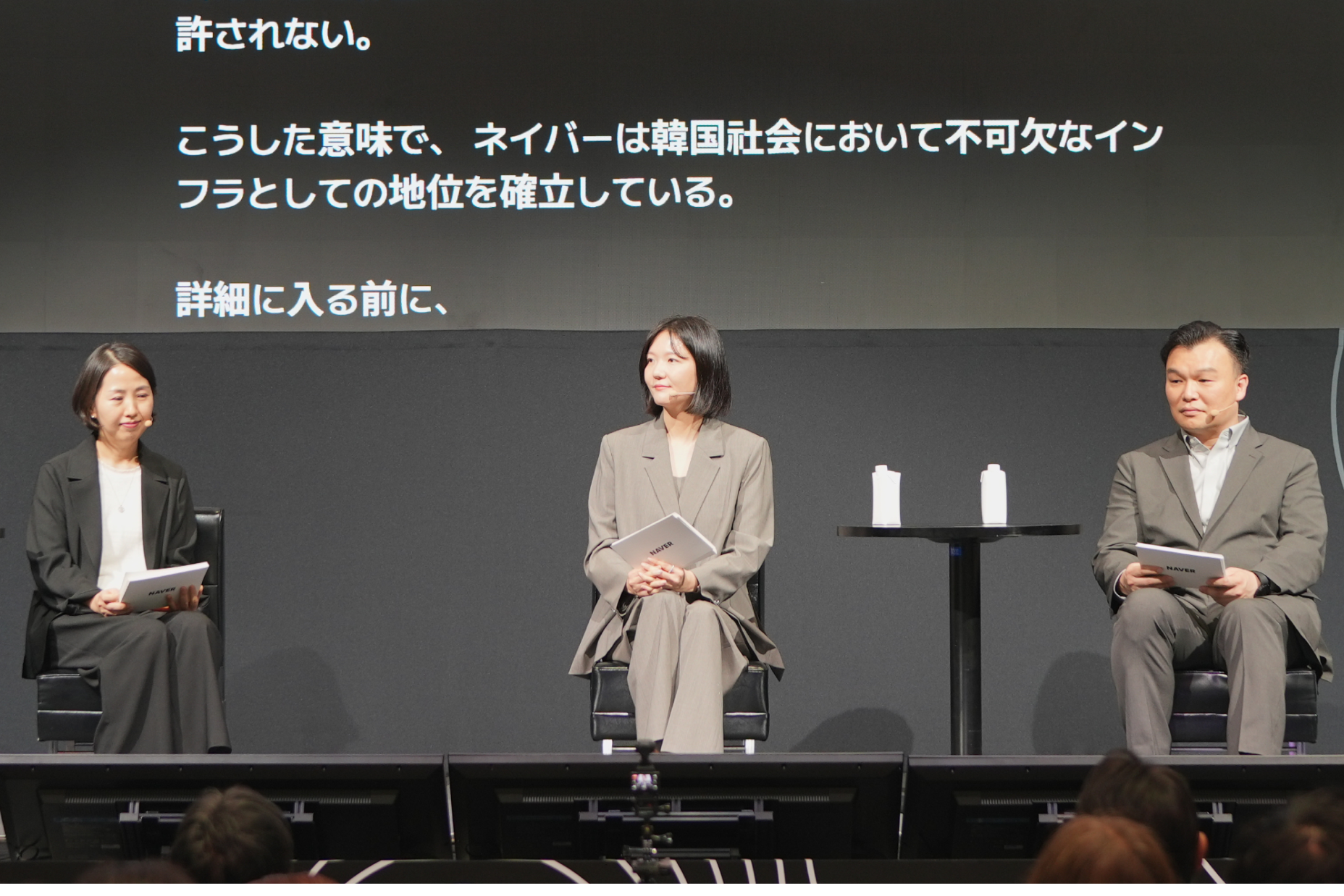
On April 27, NAVER CEO Choi Soo-yeon and NAVER LABS CEO Seok Sang-ok attended SusHi Tech Tokyo 2026, Asia’s largest technology conference. Under the theme “From AI to Society,” the two CEOs highlighted how AI is evolving into an essential infrastructure that supports people’s daily lives, while sharing the technological values and vision pursued by NAVER. Below are some of the key takeaways from the session.
Q. To NAVER, what does it mean for AI to become a social infrastructure?
CEO Choi Soo-yeon | Services that function as infrastructure tend to have several things in common – they must be easily accessible in everyday life without any additional cost, and even small changes in such services can have a very large impact on society. Lastly, they should remain highly reliable, as they cannot afford to stop or have any downtime, even for a moment. In this sense, NAVER is already functioning as an infrastructure in Korean society. The consumer benefits generated by NAVER’s services are estimated at more than KRW 200 trillion annually – equivalent to over KRW 12 million per person each year (Digital Economy Report 2025, KAIST). This figure goes beyond simple business performance for NAVER. Rather, it represents the weight of the social responsibility that the company carries, as well as the level of trust placed upon us. Based on this responsibility and trust, NAVER considers its core mission to be “transforming AI into services that anyone can easily use.”
Q. Why is sovereign AI important for NAVER’s philosophy on AI?
CEO Choi Soo-yeon | NAVER has always built its services based on the philosophy that “innovation always starts from both technology and users.” In order to address user inconveniences, you must begin by understanding and respecting the user’s language, culture, and value system. NAVER became the third company globally to develop a hyperscale AI model, laying the foundation for “Sovereign AI” based on Korean users. We have also designed a cloud infrastructure that respects the laws and regulations of each country. Through sovereign AI, NAVER aims to enhance users’ competitiveness and contribute to the development of society in the AI era.
CEO Seok Sang-ok | Another key pillar in realizing Sovereign AI is “data.” Just as our ancestors built Janggyeonggak to preserve the source of knowledge in the past, in the AI era, the ability to independently manage and control data will determine the survival of nations and companies. The valuable data that NAVER has gathered through blogs, communities, and shopping services itself is NAVER’s unique competitiveness.
Q. How is the philosophy behind sovereign AI applied to the actual work on site, or people’s daily lives?
CEO Choi Soo-yeon | LINE WORKS is a great case in point. LINE WORKS is optimized for dynamic and intensive workplaces such as manufacturing sites. We ensure continuity in work through features like “Roger,” which allows real-time communication with colleagues like a walkie-talkie and records conversations, and our OCR technology, which helps to reduce redundancy in work by accurately recognizing complex handwritten documents, including contracts or receipts, and automatically transforming them into data. Ultimately, technology is what creates efficiency, and this efficiency further expands our social safety net. CareCall is another service that was created in this context.
CEO Seok Sang-ok | CareCall started from the idea that “the more advanced the system is, the easier it should be to use.” AI that works in the background and runs with simple conversation – that’s what NAVER means by “Technology for All.” It is not about removing features; rather, it is about lowering the barrier for more people to use.

Q. To what extent can AI expand in the future?
CEO Choi Soo-yeon | AI is no longer just inside a screen. It’s starting to move in real spaces. And as the starting point for implementing AI in our physical spaces, NAVER is developing our digital twin technology that recreates real-world environments in a virtual space.
CEO Seok Sang-ok | NAVER has already built digital twins for three cities in Saudi Arabia – Mecca, Medina, and Jeddah. In Nagai, Japan, we built a disaster response platform with NTT East and K-water. The platform can simulate flood and water damage scenarios while monitoring city conditions in real time. Digital twin continues to be expanded to more local governments, becoming a core infrastructure for city operations that helps to keep cities safe.
Q. Lastly, what are some prerequisites of “sustainable AI” as defined by NAVER?
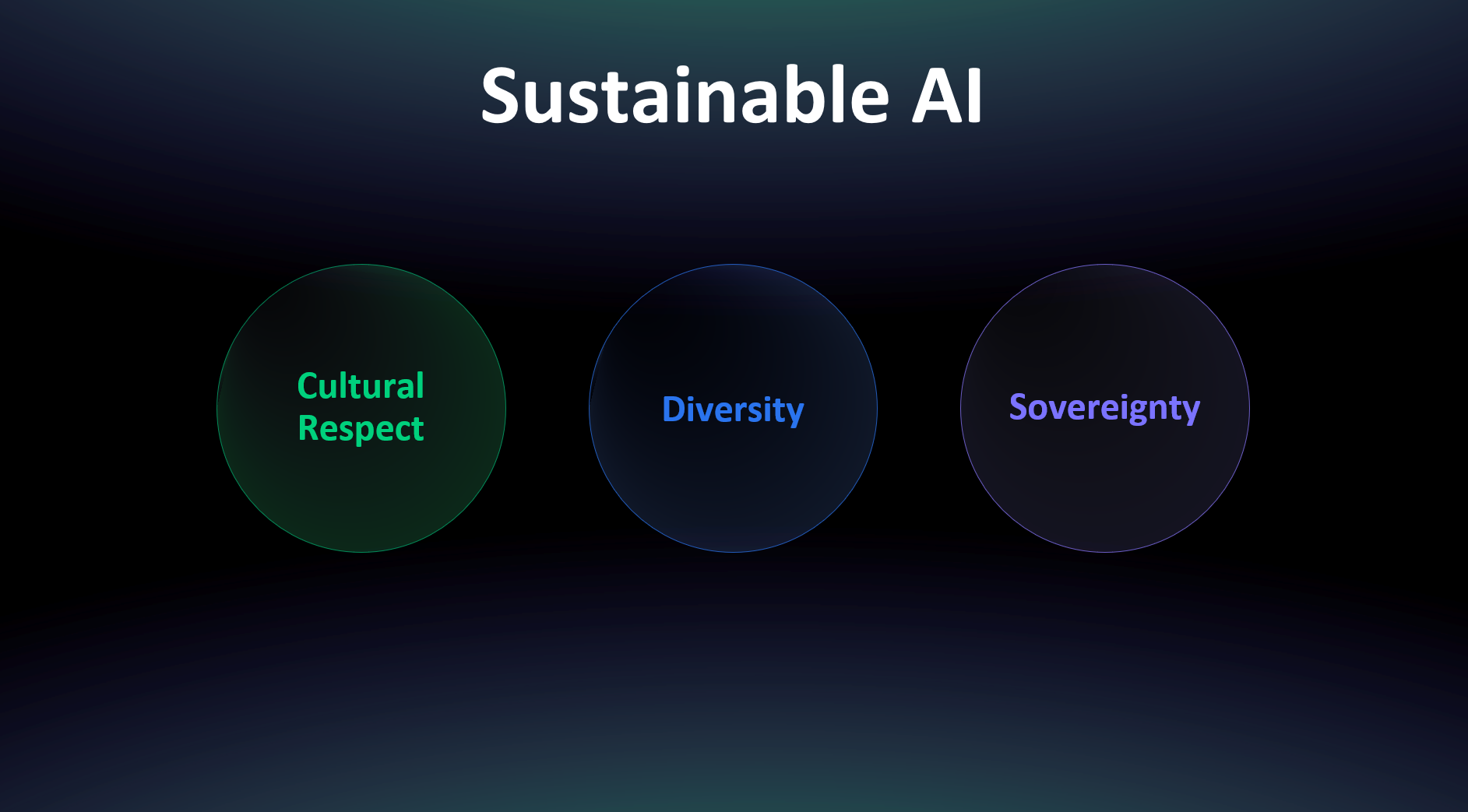
CEO Choi Soo-yeon | “Sustainable AI” is not about the pace of its advancement or how long it lasts. AI should work within each context, without distorting the language, values, or systems, with an ecosystem in place to guarantee that various AI models can coexist. Above anything else, AI should be a partner that helps people make better choices. Because NAVER believes true sustainability lies in a careful balance between “tech scalability” and “social responsibility,” we will keep striving to find that balance.
► Learn more about NAVER Cloud’s LINE WORKS and CLOVA CareCall (Link)
